It is in Konya Province, Selçuklu District, in the west of Alaeddin Hill. It has been constructed by Vizier Sahip Ata Fahreddin Ali in the term of Seljuk Sultan İzzeddin Keykavuz the 2nd, for providing hadith science education in the year 663 in Islamic calendar (1264 Gregorian). The architect of the building is Keluk bin Abdullah.
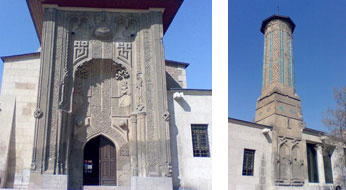
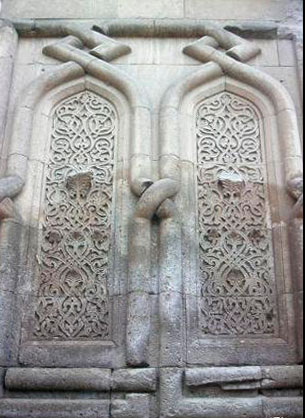
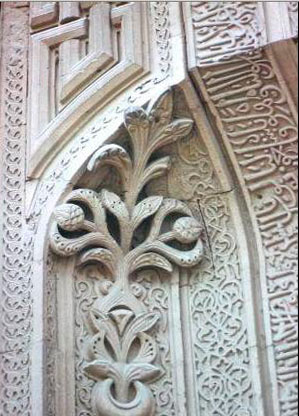
Darü-l Hadis is among the madrasas of Seljuk Period having closed courtyard. It has a single liwan. The throne door in its eastern side is among the most beautiful samples of Seljuk Period stone workmanship. Three small columns and arch box located on both sides of the entrance arch are ornamented with plant and geometric motifs.
From the throne door, the place with cross vault is accessed. This place, which is not seen when looked from the front, constitutes symmetry for the main liwan of the building.Two niches on the side walls of this place provide an aesthetic appearance for the architecture.
From the cross vaulted entrance part, audience hall is entered. Cradle vaulted and rectangular planned student cells are located in the south and north of the square planned, domed courtyard, in the middle of which, there is a pool. Passage to the dome is provided with pandantives. On the dome rim, "El - Mülkü - Lillah" "Ayet - el Kürsi" is written with kufi writing. The building provides light from the crenel and rectangular windows and the lantern in the dome.
Across the entrance, the liwan with low vault, to which access is provided via three steps, is located. There is a square - planned, domed classroom on each of the two sides of the liwan. The front side of the monumental structure is made of cut stone and the external sides of the side walls are made of rubble stone. Brick has been used in internal locations for both static and decorative purposes.
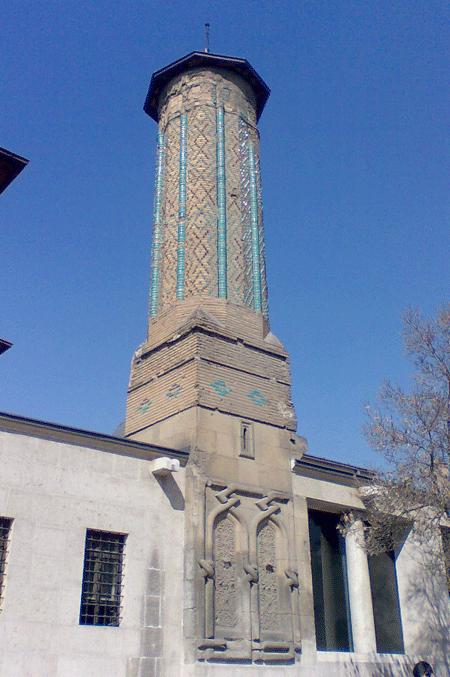
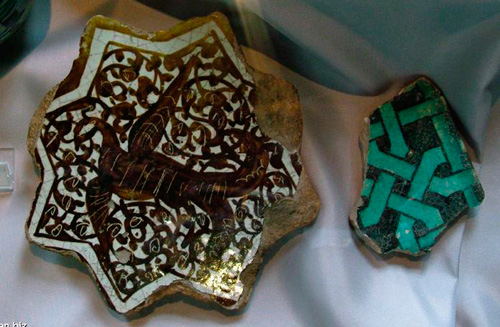
From the mosque located in the north, only the mihrab made of brick has remained today. The base part of the minaret, which has given its name to the building, is coated with regularly cut stone. The body part is completely made of brick. Its body existing today has eight corners and is in the form of bumps in various shapes. The minaret is made of turquoise coloured, white - dough bricks. While the original of the minaret had two balconies, the thunderbolt that has fallen in 1901 has destroyed one of the two balconies.
İnce Minaret Madrasa has carried out its activity until the end of the 19th century. It is known to be repaired between the years 1876 - 1899. After various repair works that were started in 1936 in the Republic Period, it was opened to service as Stone and Wooden Works Museum.
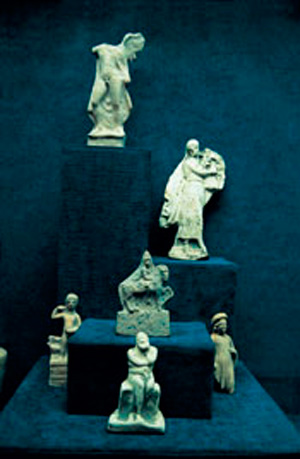
In the museum, construction and repair inscriptions written with carving technique on stone and marble belonging to Seljuk and Karamanoğlu Periods, high reliefs belonging to Konya Fort, door and window wings ornamented with geometric and plant motifs made with carving technique on various wooden materials, samples of wooden ceiling centre and tombstones made on marble and coffins are exhibited.
The most beautiful samples of double headed eagle, which was the symbol of Seljuks whose capital city was Konya, and winged angel figures are exhibited in this museum.
Alaeddin Meydanı
Tel : (0332) 351 32 04
The museum is open everyday except Mondays from 08.30-12.30 am to 13.30-17.30 pm.
|